
Ontonagon Released Mugshot Records
A booking photo is an image made during the arrest or booking process. It belongs to that booking record. Release does not turn the photo into proof of guilt, and the image alone does not show whether charges were dismissed, a sentence ended, or another agency took custody. Pair it with the booking number, arrest date, case number, release timestamp, and disposition whenever those fields are available.
Michigan’s arrest-card framework recognizes digital front-face, profile, and identifying-feature images as biometric arrest data when an agency has electronic capability. MCL 28.241a identifies the record type. It does not order every county to publish booking images online. Access to an agency copy instead depends on Michigan FOIA, lawful exemptions, redactions, and the facts of the request.
Where Ontonagon Released Mugshots Appear
No single portal covers each photo type. The county booking image, an MDOC offender image, and a registry photo come from distinct programs and should not be treated as interchangeable. MI-VINE is a status and notification service, not a photo archive. Commercial pages and news reports may retain a copied image, but neither is the originating record.
| Channel | Has photo? | How to access |
|---|---|---|
| Ontonagon Sheriff website | No public gallery found | Use a named-booking FOIA request |
| Sheriff mobile app | No official app found | Do not relabel VINELink as a sheriff app |
| MDOC OTIS | Sometimes | Search an MDOC record; the image may be unavailable |
| Michigan public registry | For a qualifying registrant | Search the official registry for its statutory purpose |
| MI-VINE | Not a mugshot archive | Use for custody status and notifications |
| News or commercial archive | May retain an image | Treat only as a lead; verify through an official source |
The table separates discovery from proof. An old image can identify a possible booking, but only the originating agency, a court exhibit, or another named official record establishes provenance.
Ontonagon Sheriff Mugshot Policy
The official Ontonagon Sheriff page contains no current roster, recent-release gallery, booking-detail page, or public photo field. It also links no official sheriff mobile app. The absence is important. A released person’s photo cannot be said to remain on a county 24-hour or 72-hour feed because the researched county site offers neither feed.
The official Ontonagon County Sheriff page shows the actual county web offering:
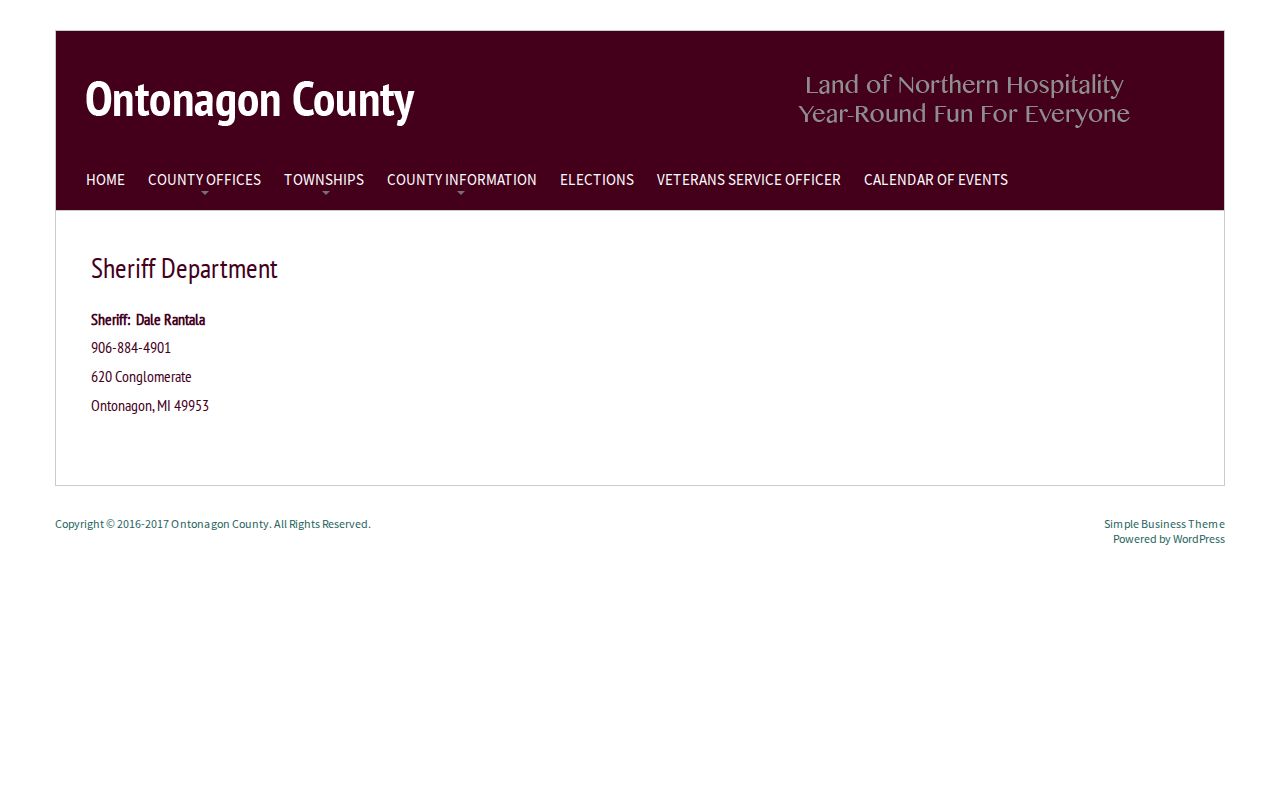
The screenshot documents the public office page, not a claim that no internal booking image exists. A named record request remains the direct photo path. The Released Last 24 Hours page uses the same evidence-based fallback for same-day release events.
VINELink should stay separate. Its mobile app can provide custody alerts from participating agencies, but it is not an Ontonagon Sheriff app and is not a browsable released-mugshot archive.
Request Ontonagon Booking Photos
Submit a narrow written request to the Ontonagon County Sheriff under the Michigan Freedom of Information Act. A specific booking is easier to locate than a broad image request and reduces the risk of receiving the wrong person’s record. The Sheriff page does not publish a dedicated request form, email, fixed fee schedule, or records-counter hours. Call first to confirm the current submission method.
- Identify the person by full legal name and date of birth when known. Add a documented alias only as a secondary clue.
- Give the arrest or booking date range, booking number, and court case number when available.
- Ask for the booking photograph from that specific event, preferably the original electronic image or highest-quality existing electronic copy.
- Include the related booking and release identifiers if provenance or release context is needed.
- Send the request to the Sheriff at 620 Conglomerate, Ontonagon, MI 49953, after confirming the current delivery channel at 906-884-4901.
- Review any fee estimate, redaction, exemption, or denial notice. Use the statutory appeal route if needed.
Michigan FOIA generally calls for a response within five business days, with a permitted ten-business-day extension. That is a response deadline, not a promise that records will be produced within five days. Search, review, redaction, and copy fees can be charged as allowed by law.
A FOIA response may provide the image, redact part of it, invoke an exemption, state that no responsive image was found, or seek a deposit when the estimated fee crosses the statutory threshold. Ask for the agency’s written basis if access is denied. Michigan law provides administrative and court appeal routes. The judiciary itself is outside FOIA’s definition of a public body, so a photo filed as a court exhibit must be requested under court-record access rules from the correct clerk.
Note: Ask for an existing electronic file; FOIA does not require the Sheriff to create a new image format or composite.
Ontonagon Mugshots Beyond the Jail
OTIS may display an offender photograph for a person who entered MDOC custody. It may lack a photo for someone who left before electronic images were taken or who has not yet been photographed. An OTIS image is an MDOC offender image, not necessarily the photo made during the Ontonagon arrest. OTIS can keep a routine discharged record visible for three years after supervision discharge, unless a lawful change applies.
The Michigan Public Sex Offender Registry can show a photo only for a person with a current qualifying registration. A registry result does not stand for all released people, and the photo belongs to that separate statutory record. The official registry search is shown here:
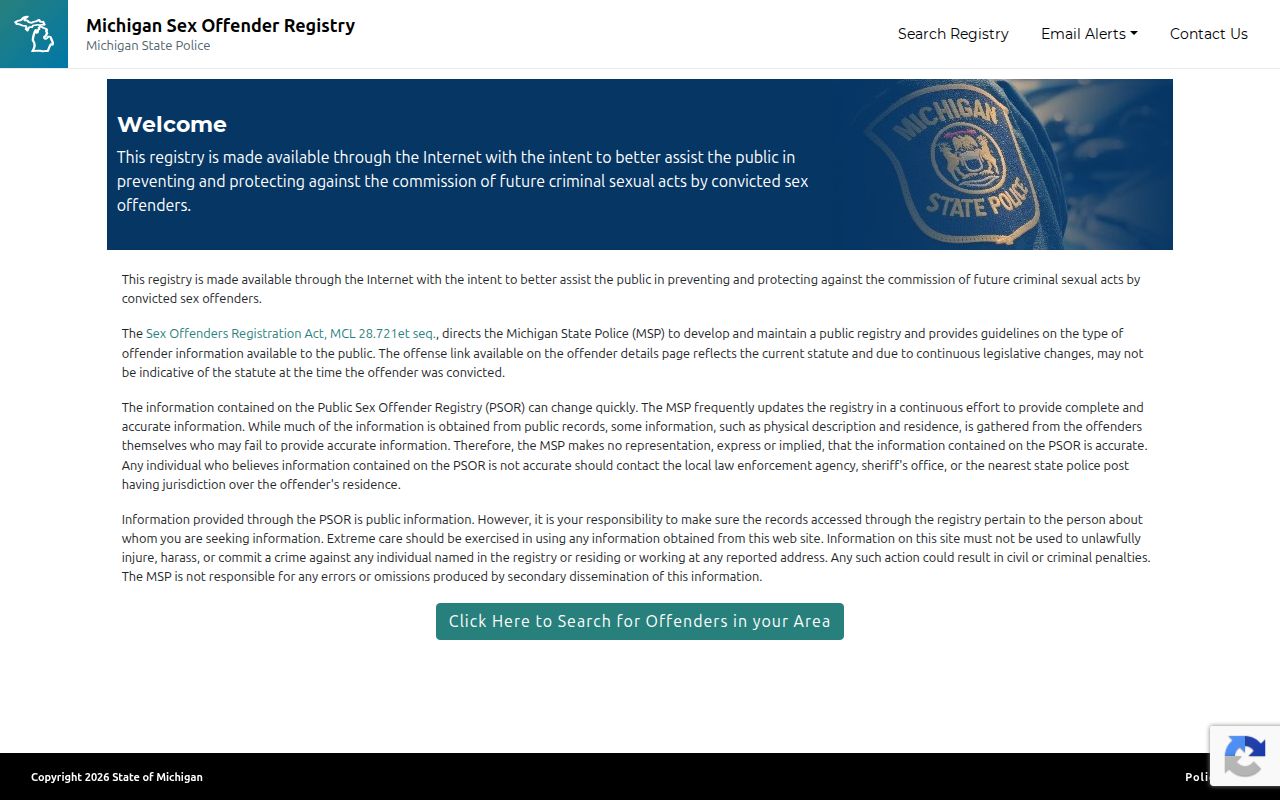
The registry screen illustrates a narrow official channel. No result there says nothing about whether a person was released from the Ontonagon County Jail.
Local news and law-enforcement releases may preserve an arrest or offender image after release. Check the publication date, caption, credited source, and later court action. Commercial booking pages often copy stale records, omit release updates, or confuse counties. They may supply a spelling or booking-date lead, but should not be linked, endorsed, or labeled official.
A useful source check asks four questions. Who first made the image? Which booking or MDOC record does it represent? What date and agency appear in the caption? Does a later court or release record change the status? If any answer is missing, describe the image only as an unverified lead. Never copy a commercial caption that calls an old image current or assumes the person remains in custody.
Clean Slate and Released Mugshots
Michigan’s Clean Slate process can explain why an old conviction no longer appears in public court or OTIS results even though a historic custody and release event once occurred. Eligible misdemeanors generally use a seven-year waiting period. Eligible felonies generally use ten years after sentence imposition or completion of MDOC imprisonment, whichever is later. Numeric limits, offense exclusions, and other statutory rules apply, so a broad rule should not be used to predict one case.
The Michigan Clean Slate information page is the official overview:
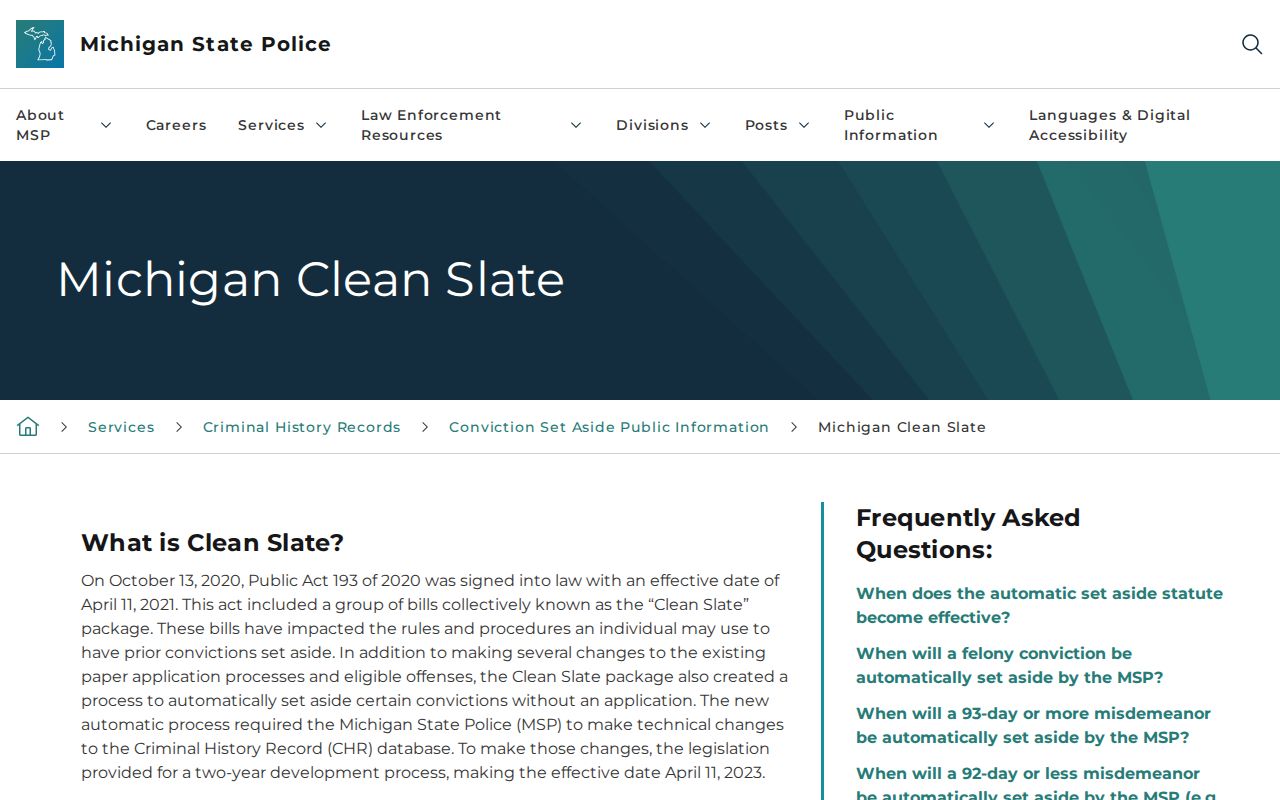
The state page explains eligibility and effect. Ontonagon’s Circuit and District Court pages also point people to Michigan Legal Help for set-aside assistance.
A verified set-aside or sealing order can change public court and OTIS visibility. Send the official order to the agency or publisher that controls the copy and identify the exact record. No enacted official source in this research established a Michigan law that specifically requires counties to publish mugshots, or a statewide anti-pay-to-remove statute aimed at mugshot sites. State that absence narrowly. FOIA exemptions, juvenile confidentiality, privacy, copyright, provenance, and set-aside law can still affect access or display.
Set-aside and release are also distinct. A person can be released while a conviction remains public, or obtain a later set-aside long after custody ended. An arrest image may relate to charges that were dismissed rather than a conviction. Review the final court disposition before describing what the photo represents. When an official source changes its record, an old copied label should not be preserved as though it were current.
Note: Removal from one public system does not prove every lawful historical copy has vanished; check each source and its current status.
Verify Ontonagon Mugshot Context
A photo does not establish present custody. First, identify who made or published it. Then match the name, date of birth, booking date, booking number, court file, and arresting agency. Use MiCOURT to review the bond, dismissal, plea, sentence, and later orders tied to the case. If the Sheriff says the person left the jail, ask whether the disposition was community release or transfer.
For an MDOC image, read current status and Date Paroled or discharge details. “Parole” means the person left prison into supervision. “Discharged” means MDOC jurisdiction ended. For a county booking image, the jail release sheet gives the release timestamp and disposition. MI-VINE may add a near-real-time event, but it is not the permanent booking-photo record.
- Provenance
- The named agency or record from which the image came.
- Booking photo
- An image tied to one arrest or booking event.
- Release disposition
- The recorded way a person left a facility, such as bond, sentence completion, or transfer.
- Set-aside
- A lawful Michigan process that can remove an eligible conviction from public view.
A careful record trail prevents an old Ontonagon County image from being mistaken for a current custody status or a different person with the same name.